
Osteoporosis & Bone Health
Specialist metabolic bone care — from risk assessment and bone density screening to evidence-based therapy, hormone health, and fracture prevention.
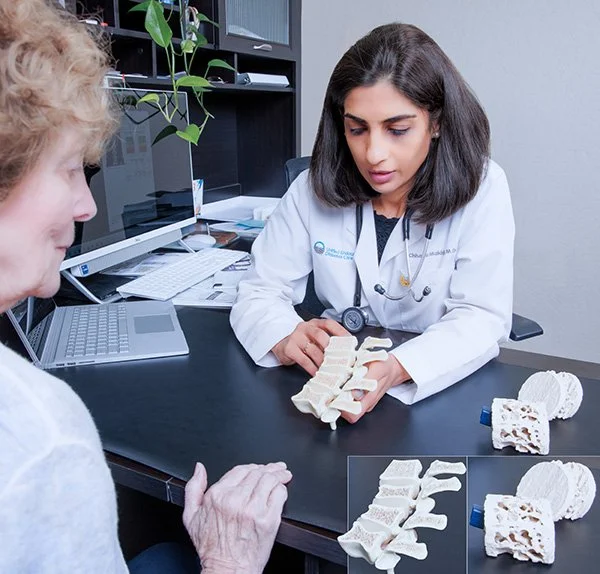
Medically reviewed by Dr. Chhaya Makhija, MD, Triple Board-Certified Endocrinologist, in Sept. 2026.
Understanding Osteoporosis
Osteoporosis is a "silent" bone disease that commonly affects postmenopausal females and is one of the more common causes of fractures in elderly women and men. In the United States, an estimated 10 million people aged 50 years and older have osteoporosis.
Getting a bone density scan earlier — at perimenopause or menopause, or if you have risk factors — helps address the condition and prevent osteoporosis.
Risk Factors: When Is Screening Indicated?
Other than age, the common risk factors below should be assessed to determine whether a screening bone density is indicated:
Lean body weight
Premature or early menopause
Rheumatoid arthritis
Prior history of fragility fracture
Family history of hip fracture
Kidney stones
High calcium/hyperparathyroidism
Steroid exposure
Use of an aromatase inhibitor for breast cancer
Long-standing vitamin D deficiency
Hypocalcemia (low calcium in the blood)
Other medications causing bone loss
Diabetes mellitus
Hyperprolactinemia
Amenorrhea
Metabolic Bone Disease and the Endocrinologist's Role
Endocrinologists are specialists in metabolic bone disease, which includes:
Osteopenia
Osteoporosis
Paget's disease of bone
Osteomalacia, related to very low vitamin D for a prolonged period
Thyroid disorders
Calcium disorders
We can prevent osteopenia and osteoporosis in an individual with a history of osteopenia by reviewing their clinical data, addressing deficiencies, treating the conditions or root causes driving bone loss, and starting preventive therapy sooner, such as hormone replacement therapy.
Treatment Options
Hormone replacement therapy, i.e., estradiol in the form of a patch or tablet, is FDA-approved for individuals to prevent osteoporosis with a diagnosis of osteopenia. If the woman has an intact uterus, progesterone is indicated with estradiol to protect the endometrium.
Treatment for osteoporosis includes medications such as oral antiresorptive therapy, bisphosphonates like alendronate, Reclast (zoledronic acid) infusion, or denosumab (Prolia) every 6 months. This is very individualized and needs to be assessed and discussed to determine what would be best for the patient.
Anabolic therapy, or bone formation therapy, includes medications like teriparatide, abaloparatide, and romosozumab.
Lifestyle Interventions
Lifestyle interventions include:
Weight-bearing exercises such as walking, and running, along with impactful exercises like jumping or rope jumping, in a supervised setting
Strength training to improve balance, posture, muscle mass, and muscle strength — in order to prevent falls and to improve musculoskeletal health and mobility
Emerging Technology: OsteoBoost
A recently approved medical device, OsteoBoost, is based on its vibration frequencies to prevent worsening of low bone density in patients with osteopenia, as studied in postmenopausal women. The device is still not covered by health insurance and is expensive, but it is good to know that we are getting more studies to see what else can help prevent osteoporosis.
How I Approach Bone Health in My Practice
In my office, I address initial screening early on rather than waiting until age 65. I address all the risk factors, including getting a 24-hour urine calcium and assessing the patient's mobility, exercise, nutrition, and supplements, as well as a body composition scan to assess muscle mass and lean body weight as part of bone health, alongside evidence-based medications.
Hormone replacement therapy is a good topic to discuss with every woman, so she can make a well-informed decision about her bone health.
Frequently Asked Questions
I have low bone density or osteoporosis. How much calcium and vitamin D should I take?
Ideal recommendations for calcium in adults are between 1,000 and 1,200 mg per day in divided doses — mostly through nutrition, and then through supplements if needed. In postmenopausal females, it is around 1,200 mg per day.
There are various sources of calcium in foods other than dairy, such as:
Greens
Broccoli
Kale
Spinach
Nuts and seeds
Beans
Lentils
Having a variety of these foods helps incorporate calcium into the diet.
With regard to vitamin D, the natural source is the sun, but for several reasons, this is not usually adequate, or you may not be able to absorb enough sun (more on this here). Depending on your baseline level of vitamin D — whether you are starting from a deficiency or from an adequate level — your daily intake of vitamin D supplements may vary. Recommendations are between 800 and 2,000 IU per day, depending on the case, but it is not surprising that many individuals need higher daily D3 to maintain an optimal level of vitamin D for their bone health.
Guides and Resources
Our osteoporosis guide:
https://tr.ee/KEyKoOpEIP
Videos:
https://youtu.be/SviTZEdH5Wc?si=7UOsHxC-AnZjoI1Y
https://youtu.be/pVZxRZH39g0?si=icr_s_uL0rV_jnje
https://youtu.be/6QyzESJeJZs?si=sEU3vhS7yltFMvWl
Additional resources:
https://www.bonehealthandosteoporosis.org/preventing-fractures/prevention/
A Note on Insurance
Unified Endocrine Care is an out-of-network practice. Practicing outside of insurance networks allows us to give each patient the time and attention their care deserves, and to build treatment plans around clinical need and personal health goals rather than around the limitations insurance coverage places on them.
Ready to Transform Your Health?
Request an Appointment
Tell us a little about you and your goals. Our team will reach out to confirm your appointment and next steps.
PLEASE NOTE:
Unified Endocrine Care is a direct pay, concierge style practice that does not participate with any insurance plans, which allows Dr. Makhija to provide longer visits and highly personalized care without the constraints of insurance.
Complex Hormones Require Specialist-Level Care
Conditions We Treat:


Where we Provide Osteoporosis & Bone Health Care:
In person at our Fresno office (serving Clovis, Visalia, Madera, Hanford, and Tulare) and our Lafayette office (serving Walnut Creek, Orinda, Danville, Berkeley, Oakland, and San Francisco) — plus telehealth for patients anywhere in California.